
So far, these articles have looked at the fans’ impact and the financial impact clubs face.
These are important to what the clubs are prioritising ahead of the new structural changes impacting the league.
One issue that I haven’t covered is the key components of a team’s squad, particularly the manager.
Managers have extreme pressure on themselves this campaign. Making sure you stay in the division before the 2026/27 season, as well as pushing as high in the league for extra financial benefits, is vital to giving yourself a platform before the new season.
Missing out on the first season in the new structure could be catastrophic for exposure, players the club could potentially sign, and new potential financial opportunities.
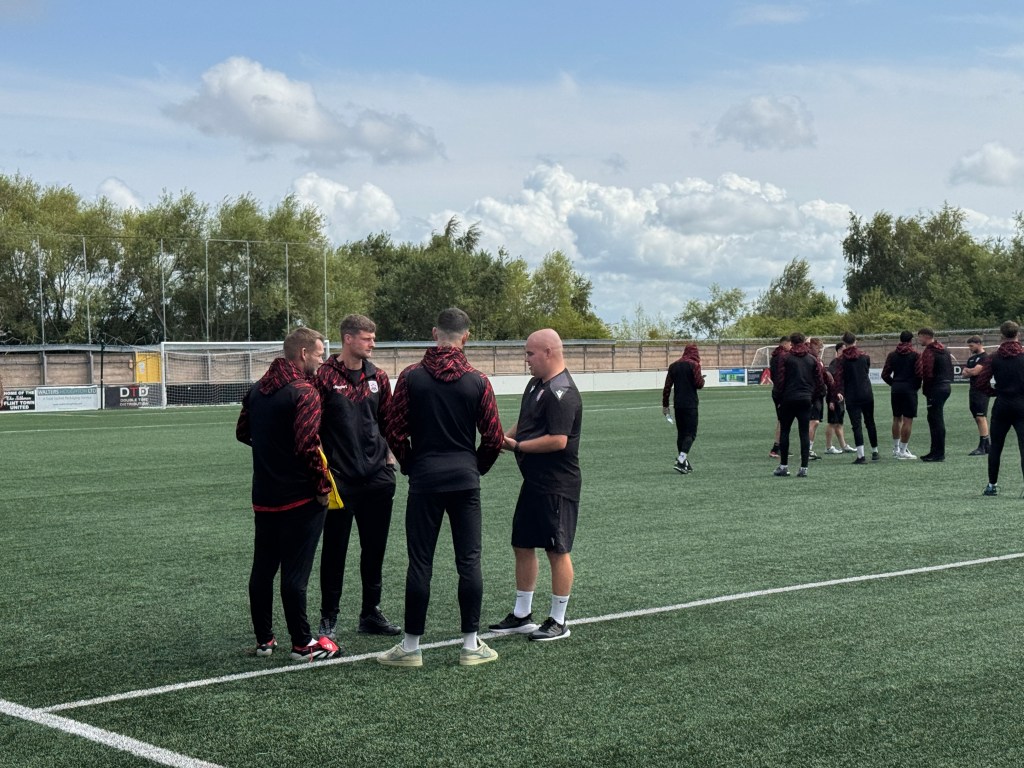
Lee Fowler is the manager at Flint Town United and has been in the position for just over three years.
Mr Fowler began his football career as a player back in 1999 for Coventry City. He had a 17-year career which stretched across the English Football pyramid, as well as spells in Wales at TNS and Cefn Druids.
He said he took a few years away from football to ‘learn different aspects of life’ but quickly realised ‘it wasn’t for me’.
He started his coaching badges and quickly became a coach in TNS’ academy. He then became a coach alongside his brother at Tamworth before moving to Nuneaton, where he became their assistant manager in 2018.
After just five months at the job, he would depart the club for Ilkeston Town, where he would become a manager for the first time. In his first season, the club were promoted and he ‘got the bug to make players better’.
In 2020, he was appointed the Radcliffe manager, before moving to Flint Town in 2022.
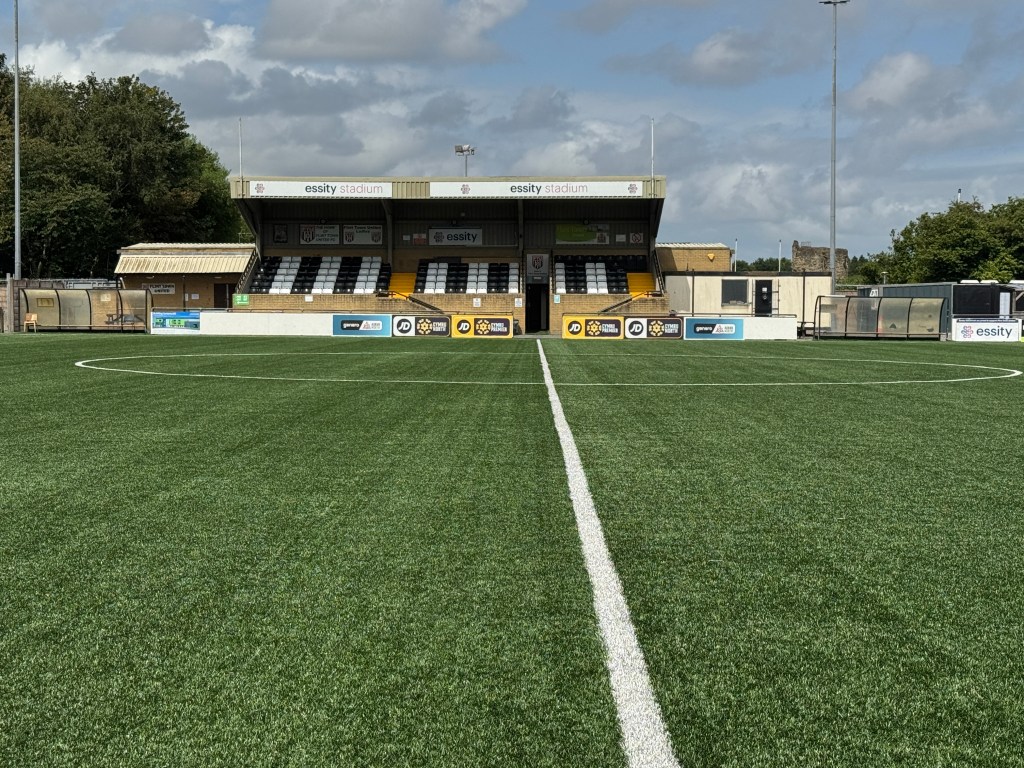
Mr Fowler believes there are some differences that make Welsh league football unique in comparison to English league football.
“I think Welsh football is highly technical, and I think a lot of teams would struggle in the lower leagues in the English system. TNS are different.
“I think they have a great manager and a great set of players, and I think they would do very well to stay in the National League.”
Although Welsh football will find it near impossible to compete with English football at the top level, no matter how long Welsh football has been supported, the idea of competing to a similar level as non-League teams in England is achievable.
The switch in the league structure may help the teams in Wales compete financially and with the talent on the pitch.
Right now, with the superiority of English football, Mr Fowler challenges his players in preseason, but feels others don’t do the same.
“We organise friendlies against English teams to test our players, but sometimes a lot of the coaches in the Welsh system stick to the ‘Welsh way’ so are you really being tested quite a lot?”
During pre-season, Flint took on Vauxhall Motors, Avro and Ilkeston Town. Teams from the Seventh and Eighth tier in the English pyramid.
The Here, Now and Soon
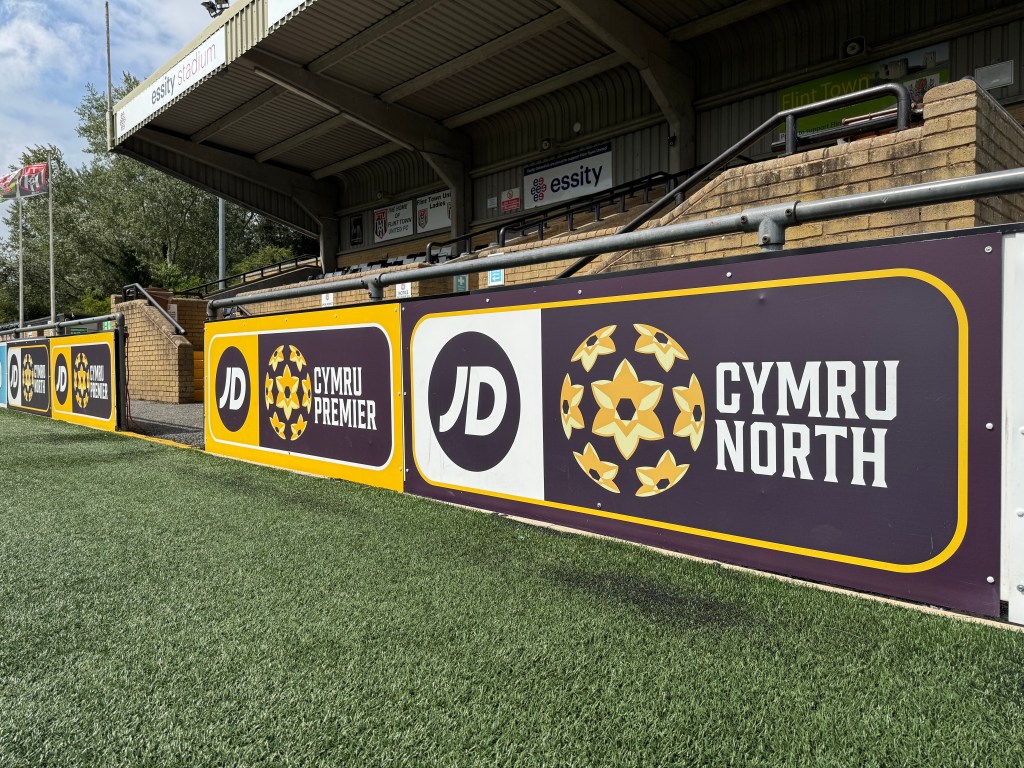
In the 2023/24 season, Flint were promoted to the JD Cymru Premier after winning the JD Cymru North title.
Mr Fowler believes it’s hard for teams like his to survive, even after a couple of seasons in the league, due to the money other teams have.
He said: “The teams that are getting promoted will find it hard to stay up because the gulf in finance is big.
“We were written off last season by many, and perhaps rightly so, however, we shocked a lot of people.”
Could this become an issue starting next season? With more wealth and financial opportunities being present in the Welsh Premier as of 2026/27, how are the newly promoted teams expected to survive.
Last season, both newly promoted teams in Flint and Briton Ferry were able to avoid the drop, but had great ends to the season to ensure they survived.
The year before, Colwyn Bay were promoted from the Cymru North but suffered immediate relegation. However, last season, Colwyn Bay were promoted yet again in record fashion in a battle against Airbus, a team who also were a part of the Welsh Premier not too long ago.
Will the changes not only expose the money issues that exist in the Welsh Premier, but also in the Cymru North and South? The deals that clubs will be able to attract, along with new prize money rewards, could lead to a group being more closed off to the rest of the country.
Mr Fowler believes it will take time for Flint to break into a cycle where they can become an established Welsh Premier side.
“We know we are the runts of the litter, in terms of finance, so let’s not get above our station. We know which lane of the motorway we are in.
“We’re in lane one doing 60mph. Last season, we came over the cats’ eyes a bit, and it felt good, but will we ever get into lane three in a Ferrari? I don’t think that’s viable”
Before the league split, Flint found themselves in 10th place, just one point above the relegation zone; however, after the split, the only team to have gained more points than them were the champions, TNS.
They ended the season 16 points above the drop zone, comfortably surviving.
Dreaming Too Big
Flint will try to do the same again next season and potentially push on for a top-six finish, at least that’s what the dream is. However, Mr Fowler accepts that there are issues with the current system.
“We know it’s a one-team league; I’ll openly say it, they should win the league every single year. Rightly so, as they have the best players, best manager and the biggest budget.”
Mr Fowler is referring to TNS, and their league dominance is seen as one of the key reasons why change is happening.
TNS have been open about their desire to have more of a challenge in the league, and why wouldn’t they? Although they win the league almost every year, the club are looking for the image of Welsh football to build, to make Welsh football more exciting, so people have a stronger interest in their local teams in Wales.
Mr Fowler likes some of the initial ideas of the changes, but urges that there are not too many drastic changes at the beginning.
“One thing it will do is make the bottom of the table more competitive, and a lot closer in terms of finance; however, you can’t change too much too soon.
“We have to remember the Welsh system is unique from others, we can’t really compete with the other leagues.”
One of the leagues Wales has been compared to since the changes have been confirmed is the League of Ireland.
However, there are major differences between the leagues. The smallest capacity stadium in the League of Ireland is Drogheda’s Sullivan & Lambe Park, with a capacity of 2,600.
The largest stadium in the Welsh Premier, is Llanelli’s Stebonheath Park, with a capacity of 3,700, but according to Transfermarkt, Llanelli’s average attendance is just over 300 fans per game, which fills just below 10% of the ground.
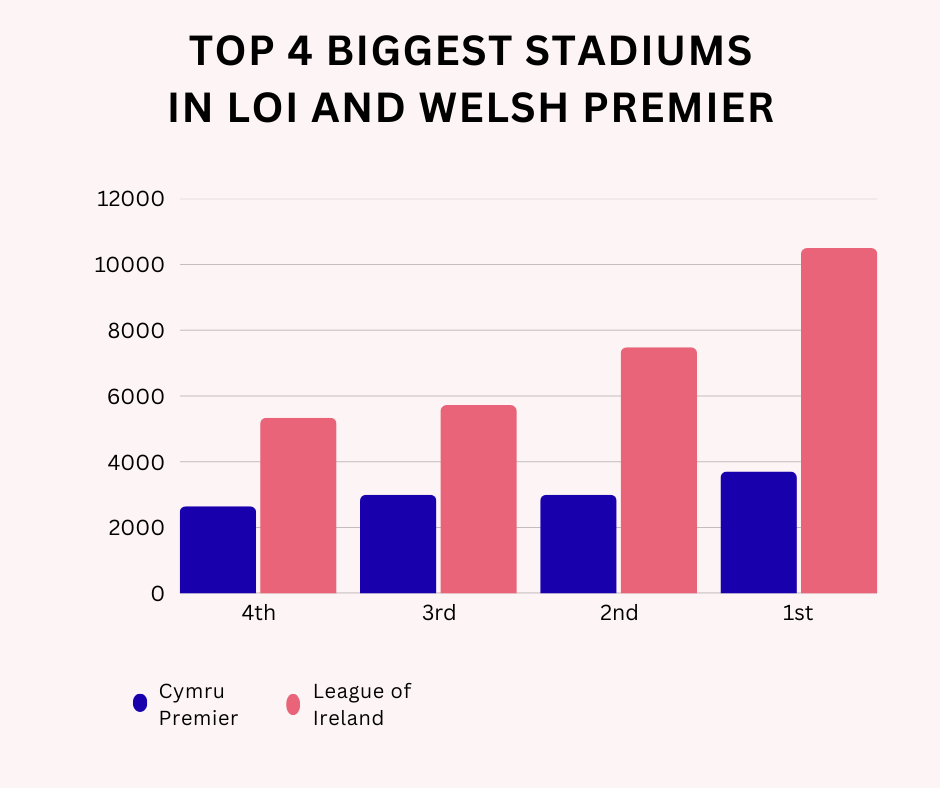
“If you look at this compared to the Irish leagues, we are a way, way off, so we’ve got to build it up to encourage new customers, but on the same part, you don’t want to discourage the existing customer.”
It’s important that the Welsh FA can strike a balance between the two. People who have been following Welsh football for a long time, will want better improvement for the league, but without too drastic changes.
The Welsh FA have struck this plan out with some great minds, and used a data-driven approach, but too much change at the initial point ‘could cause a bit of upset’.
Meetings have taken place at Flint between the shareholders at the club, the manager and key figures at the Welsh FA, such as Head of Domestic Leagues, Jack Sharp, and the CEO of the FAW, Noel Mooney.
Mr Fowler was pleased with the discussions that took place with the FAW members, but is looking for more of an open debate, where all clubs’ data is evaluated individually.
“I do like change, but I think it’s got to be everybody’s view, not just saying ‘well we have spoken to the fans, the owners and the manager’. Everyone needs to be involved.”
Working 9 to Kick Off
One of the biggest worries he has about the changes coming is the idea of the league being switched to Friday nights.
The Welsh FA have brought this idea about, as it doesn’t compete with leagues in England, meaning more people could attend Welsh Premier League matches.
Dan Davies, another person I spoke to in this series of articles, also had similar fears around the cost of travel and accommodation.
Mr Fowler has slightly different fears around this new proposition.
“Does it destroy some of the quality in the league? Because we have to remember, these players work part-time jobs.”
The shift to the Friday night league could well jeopardise it, rather than improve it. The idea might work for full-time clubs, but for teams like Flint, where their squad is made up of part-time workers, the decision ultimately comes between their passion and what puts food on the table.
“I already know that if this league goes to a Friday night league next year, I’ve lost my best player, and that’s twelve months before it’s already happening.”
For a club like Flint, who isn’t already an established team in the league, keeping hold of their best players is vital for their chances of survival in the Welsh Premier, and the same will be said for a host of teams that currently sit around the relegation zone, and the teams that come up next season.
Flint wouldn’t have done anything wrong either. It’s not like their top players would want to leave due to the club being bad or anything like that; it would just be a case of decisions made by people higher up, and the notion of this goes against what the FAW want. Instead of a competitive league, this becomes anti-competitive. A league ruled by the ones who already have the money and power.
The club would have to once again dip into something they already put a lot of emphasis on, and that is youth.
Last season, Flint had the lowest average age out of the league, at 22.3. The highest in the league was TNS, whose average age was 27.3.
Mr Fowler thinks that due to such an increase in finances, many teams will look away from developing young players.
“I think Puff Daddy sang it, ‘more money is more problems’, I think teams will use the money to fund their first team. We leave it to the academy as we believe in giving youth the opportunity.”
This summer, Flint’s centre half, Isaac Lee, who is 18, has been linked with a move to several clubs, including a host of English Football League sides, and even Toronto FC in the MLS.
Players like Liverpool’s Owen Beck and Crewe Alexandra’s Zac Williams started their careers at a youth level at Flint Town.
In the current squad, Ben Hughes has developed and come through at Flint’s academy. He has been at the club for 11 years, and first made his impression with the first team in the 2021/22 season. Since then, he has become a staple of the team and even been given the number eight shirt.
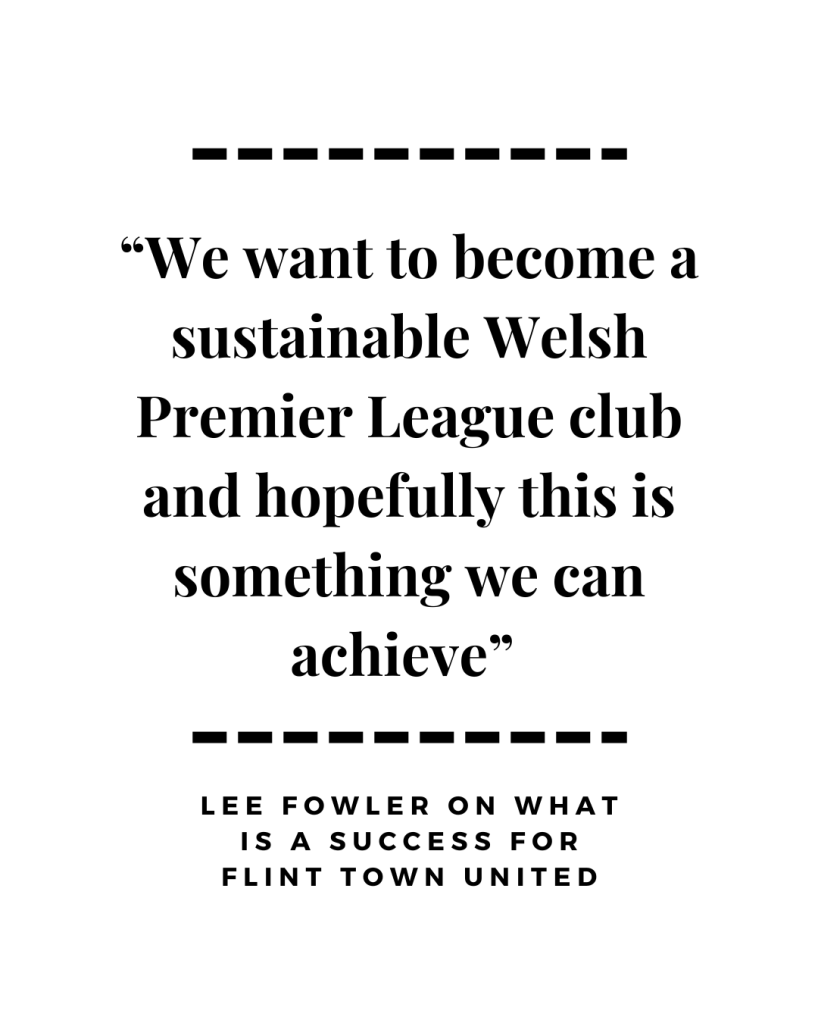
So, is this change good or bad for a team like Flint? Mr Fowler likes the aspects of the new change but thinks some gaps are too far to close.
“I think it’s good because it will make the bottom of the league more competitive, but I was watching TNS in Europe hoping they would win, and after the final whistle I was like ‘we’ve got to play these soon’, I’m a realist and I go ‘can we beat them?’ I don’t think we can.
“The Irish league has better sponsors, better TV deals, but does it have better football? I don’t think so, so hopefully this is something that improves when the new infrastructure is introduced.”
Flint and Mr Fowler know that a food chain exists in the Welsh Premier, which is pretty much like every top-flight, in every country around Europe.
The issue with Wales is that the gap is arguably one of the largest, and it would have to take something quite extraordinary to break this cycle.
That is something that Flint simply might not be able to pull off.
Cover photo taken by Daniel Moffat
 Daniel Moffat
Leave a comment