
1992. Seen by many as an incredible year for football. Leeds United won the English league title for the third time in the history of the club. Demark caused a major upset as they went on to win the European Championships, despite not qualifying for the competition, and Barcelona would win their first European Cup under the legendary Johan Cruyff.
This would also be the year that a lot of changes would take place, as we know them today. The 1992-93 season saw the introduction of the Premier League, which is now the most-watched sports league in the world. The back-pass rule was brought into effect to reduce time wasting following Denmark’s European success, and the Champions League would go under major reforms, first with the introduction of a group stage, followed by more than one team from the same countries being able to qualify for the competition.
One change that wasn’t in the mainstream, like the rest of these, came from Wales. You see, before 1992, Wales didn’t have a national league. It’s common now. Every country around the world has a national league where the best teams from that country take on each other, but Wales had cross-regional leagues. This was mainly down to poor transport links between the North and the South, and teams such as Swansea, Cardiff, Wrexham and Newport County all played in England.
Before 1992, several Welsh teams played through the English non-league systems, with Newport being one. Bangor City, Barry Town, Caernarfon Town, Colwyn Bay, Newtown and Rhyl also found themselves playing non-league football in England. The Welsh FA passed on a message to these clubs. You play in our newly formed national league, or you continue to play in the English leagues in English grounds. Bangor, Newtown and Rhyl were the only ones who agreed, and the others shared ground with other non-league teams in England. For some, they joined a few years later, while for others it took a lot longer.
In the present day, Welsh football is about to see another set of changes in the hope of making the league bigger and better. The league will see the number of teams increase to 16, and halfway through the season, the league will be split into three separate sections. One for the title race, another for the chance to play European football and the final one for a relegation battle. For anyone familiar, it will work similarly to how the Czech Republic’s top flight works. The FA Wales website states the core aims of the new structure.
. Ensure competition and exciting football
. Build the awareness and portfolio of the league
. Grow attendances
. Strengthen the on-pitch ability
. Develop a commercial product
When the announcement was made back in September, the Welsh FA’s head of domestic leagues, Jack Sharp, spoke to the BBC and said: “It was important that a structure could be identified to allow our clubs to flourish, the FAW work towards the outcomes of the JD Cymru Premier strategy and have top-flight league which the country can be proud of.”
The changes are clear to see. They want Wales to have its own competitive league system, which can showcase Welsh football on the biggest stages. Whether that is through it being televised more frequently to a wider audience, or teams being represented in European competitions, like we saw from The New Saints in the 2024/25 campaign.
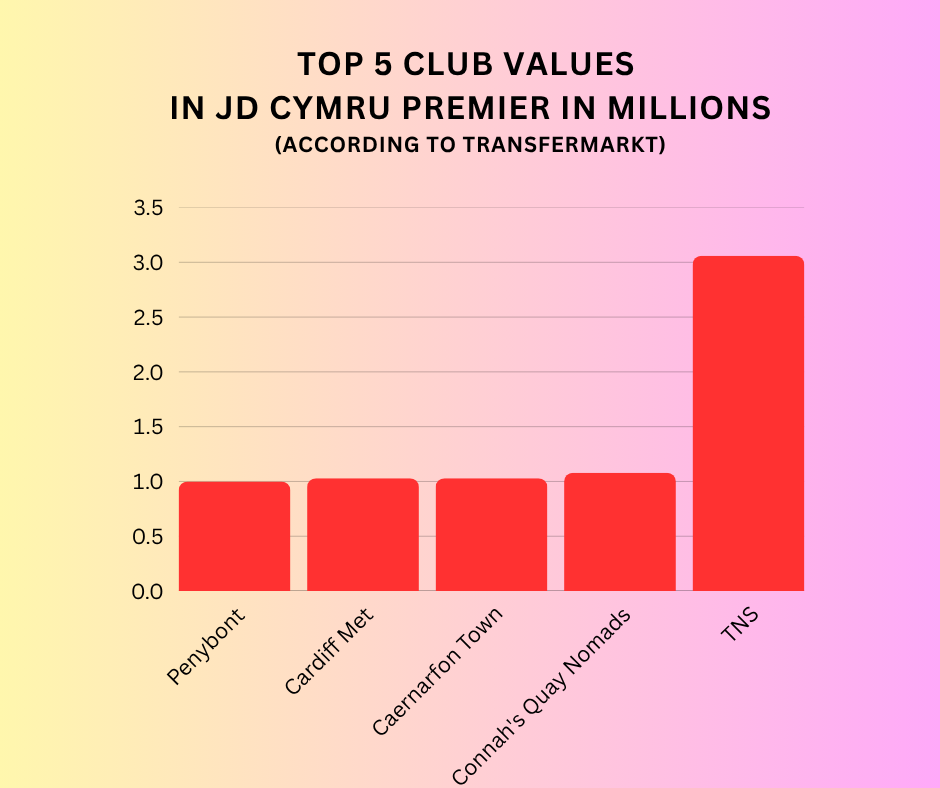
Although Mr Sharp feels the outcome could lead to a league to be more ‘proud of’, there are potential risks at play. TNS have dominated the league, having won the title 16 times in the last 20 years. There are fears that European money and the changes with commercial revenue could lead to TNS going on a further winning run, with the club already agreeing a record transfer fee for striker Ben Wilson from Scottish team Airdrieonians, as well as players released from Premier League teams like Jack Nadin from Nottingham Forest and Dominic Corness from Liverpool.
According to Transfermarkt, TNS have the 10 most valuable players in the league, with the top two joining this summer in Corness and Wilson. With the changes being introduced, which should allow more money to flow through the league, do TNS already have the necessary leg up on the others to continue this domination of the league?
There has also been trouble over a potential cup competition that would involve the likes of Cardiff, Swansea, Wrexham and Newport, with the winner having the chance to qualify for Europe. These are serious issues for the sporting integrity, not just in Wales, but in England, with the Welsh, English-based teams reaping serious rewards.
Add on top the prices for clubs to meet Tier 1 and 2 regulations, travel costs for semi-professional clubs to travel to more games throughout a season, and the latter stages of the league potentially having little to play for, there are some major risks to consider.

So will Welsh football grow into the prospect of being a league viewed as its own, one that is able to produce their own players to compete in the biggest competitions, or is it simply a dream that is too big to create a new sense around football in Wales? Time will surely tell.
But what do the people involved with football in Wales think the changes can change in their particular area?
Cover Image – “Anchor – welcome to Wales sign” by muffinn is licensed under CC BY 2.0.
 Daniel Moffat
Leave a comment